

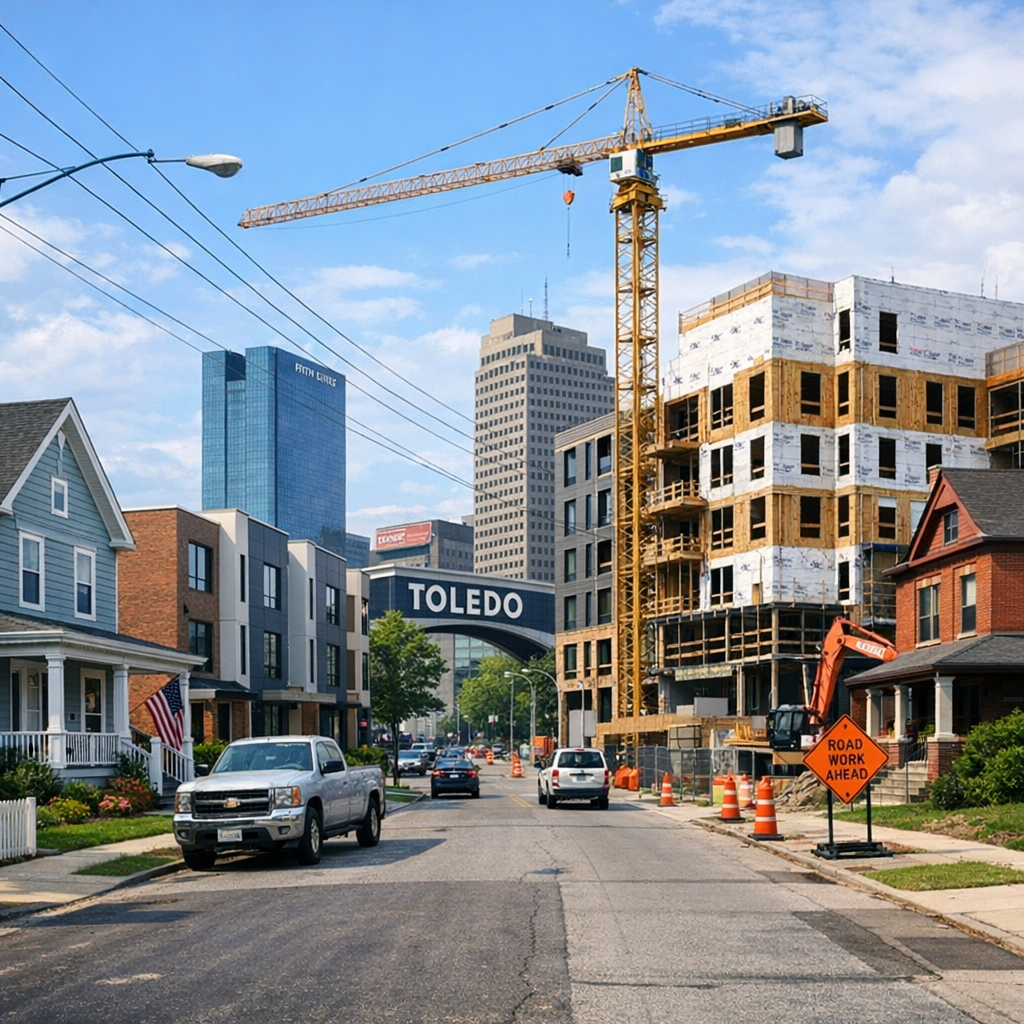
By Sophia Baker
Toledo’s housing market is currently in a period of change — one that offers both challenges and opportunities for buyers, renters, and developers. Recent data shows shifts in home prices, inventory levels, and a wave of new development that could reshape neighborhoods.
Current Market Snapshot
Median listing prices for homes in Toledo have dropped, so buyers may enjoy more bargaining power now than in the recent past. Inventory levels are climbing, meaning more options on the market. At the same time, rent is rising steadily year over year, signaling strong demand from renters. Homes are also spending more time on the market compared to last year, giving more room for negotiation.
What This Means for Buyers and Renters
- Buyers are in a somewhat stronger position. Increased listings and longer market times suggest less intense competition than during peak seller’s markets.
- Renters, however, face rising costs, particularly for one- and two-bedroom units, across many Toledo neighborhoods. For moderate-income households, locating quality, affordable rentals remains difficult.
- Neighborhoods vary widely. Areas such as Reynolds Corners and DeVeaux tend to have higher prices per square foot and rents, while South Side, East Toledo, and parts of Old West End are more affordable.
Development and Affordability Initiatives
Several new projects are helping to meet Toledo’s growing affordability and demographic-specific housing needs:
- Collingwood Green Living: A $29 million development offering 75 affordable apartments aimed at residents aged 62 plus, located near downtown. This project increases senior housing options and modernizes aging neighborhoods.
- The Grand and The Glen: Workforce housing developments in Englewood and at the former Southland Shopping Plaza, providing multi-bedroom units and townhomes priced to serve households earning 50–70% of area median income (AMI).
The Toledo Housing Corporation’s ongoing work—in the Vistula neighborhood and elsewhere—also shows how rehabilitation of historic properties and scattered-site projects can preserve cultural character while expanding affordable housing stock.
Opportunities & Things to Consider
If you’re looking to buy, rent, or develop housing in Toledo, here are key factors to weigh:
- Explore the Lucas County Land Bank’s vacant lot programs, which offer opportunities to build new homes on affordable land and play a role in neighborhood renewal.
- Understand zoning, lot availability, and community planning efforts such as the Forward Toledo plan, which guides future land use and affordable housing strategies.
- Watch public investment in infrastructure and amenities—historic renovations, connected commercial spaces, and walkable designs are enhancing livability in downtown, Vistula, and along the river.
Takeaways for Different Players
Prospective homeowners who are patient and strategic may get good deals under current conditions — but loans, down payments, and maintaining a flexible timeline still matter.
Renters should expect increasing costs and competition, especially in areas closer to jobs and public transit. Moving a bit further out may offer savings without losing many conveniences.
Developers and nonprofits have roles to play. Projects that combine affordability, accessibility, and historic preservation have growing support. Leveraging public land and financial tools can make these ideas feasible.
Toledo won’t stop changing anytime soon. For many, that means now is a moment to explore, plan, and act — whether buying, renting, or helping shape the city’s housing future.